
When it’s gone, it’s gone.
In January 2022, we were outside the gates of Cairo Mill demanding Elbit leave. On 30 October 2026, I walked through them to go shopping. After all that time outside, it felt bloody good.

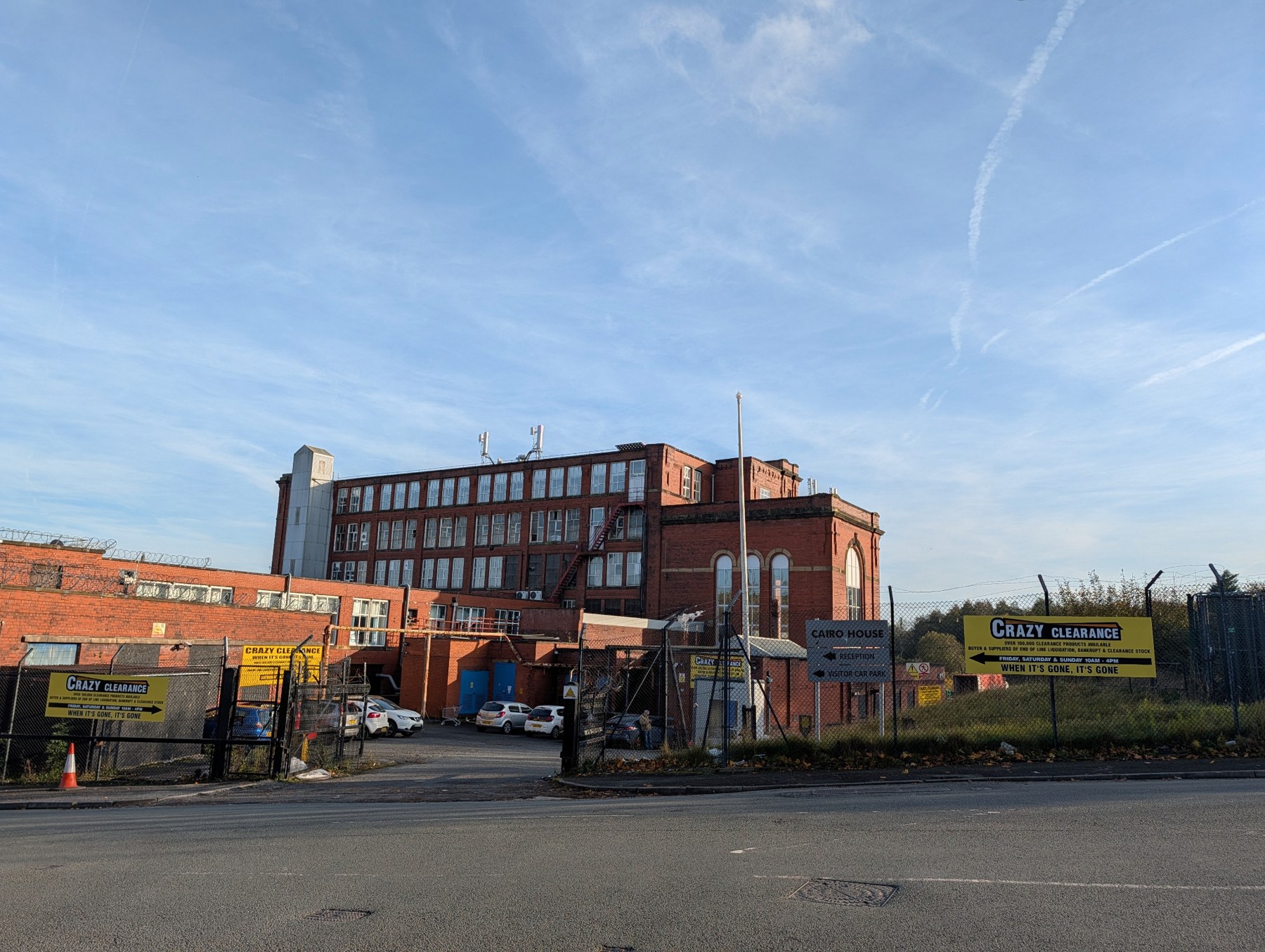
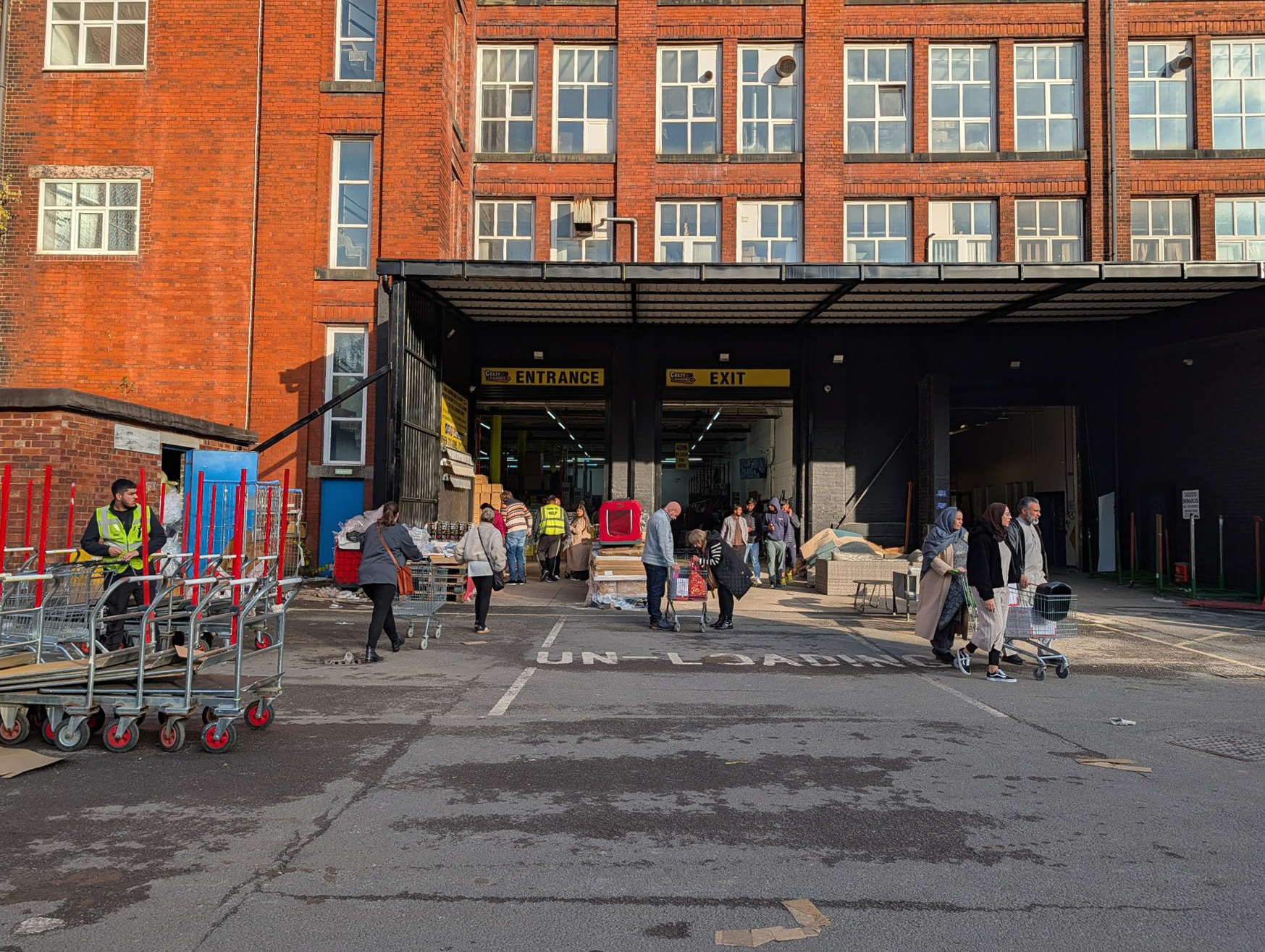
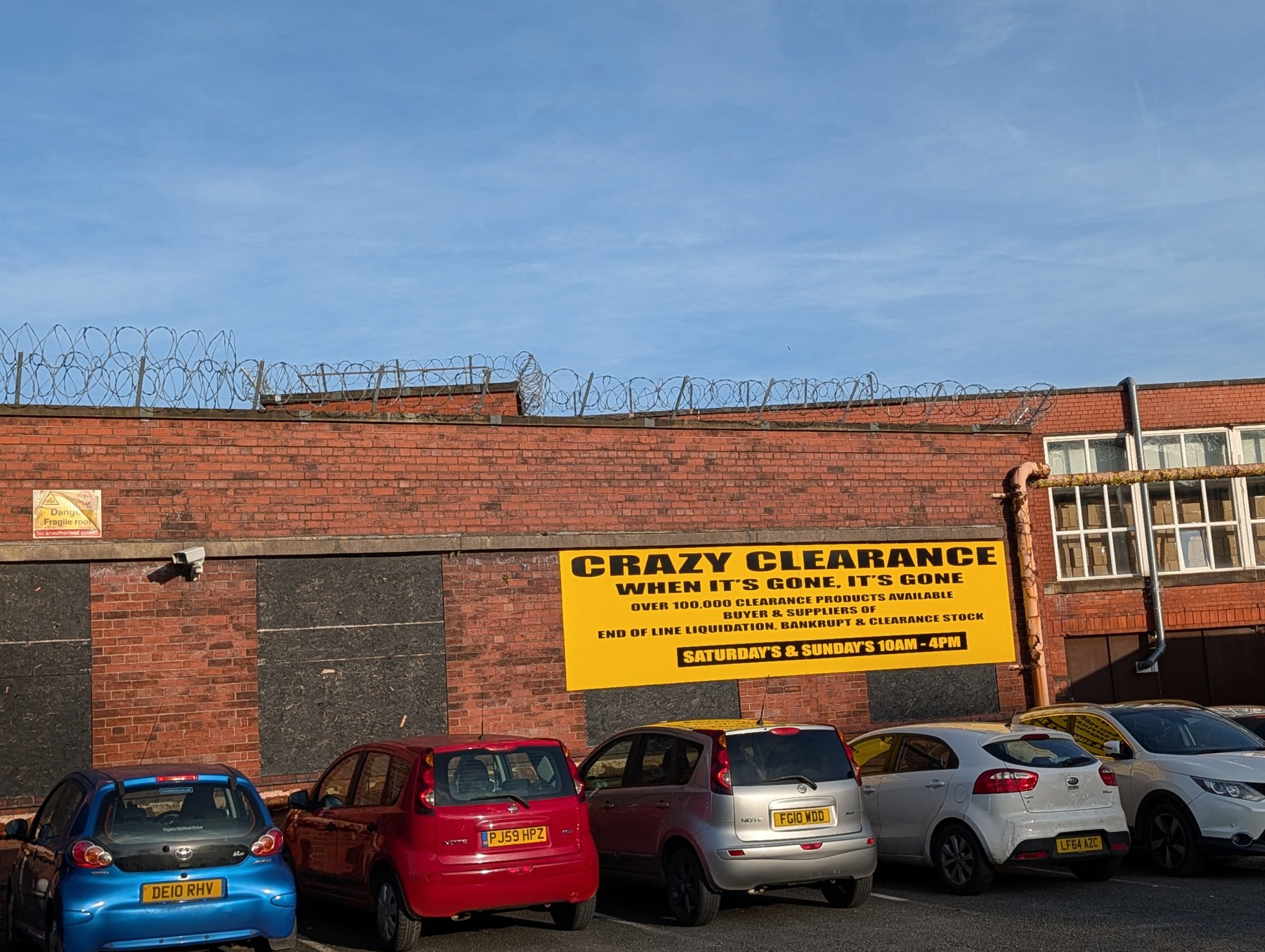
There were cars across the yard, staff in fluorescent vests and shoppers pushing trolleys past household goods. Yellow signs advertised Crazy Clearance. One read: “When it’s gone, it’s gone.”
Years earlier, I had photographed protests here. Now I was photographing people coming out with their shopping.
I remembered the argument we heard during the campaign: what about the jobs?

In one of my old photographs, children’s portraits cover the steps beneath the Cairo House sign. They rest against small coffin-shaped props. Above them, a man holds a Palestinian flag between two police officers at the doors.
Those faces explain why we were there. We wanted people to confront the human consequences of the arms industry operating in our town.
Looking between that image and Friday’s photographs, I see the same complex carrying a different meaning. The fences and security wire remain. So does the name Cairo House. But I can walk inside to shop.
The concern about livelihoods was real. Workers had mortgages, rent, children and bills. Their need to earn a living deserved to be taken seriously.
So did the question of what they were being asked to earn it doing.
People should be able to support their families without helping supply the Israeli military with weapons, military equipment or components. Concern for livelihoods here cannot be used to dismiss what happens to Palestinian families.
Crazy Clearance shows that the mill can have another purpose: people earning a living outside the supply chain of Elbit Systems, a company that supplies weapons, military equipment and components directly to Israel’s armed forces. [10]
Why should earning a living have to depend on Elbit staying?

Elbit acquired Ferranti Technologies in 2007. Local campaigning developed over years, with weekly rallies from May 2021 and repeated occupations disrupting the site. In January 2022, after approximately eighteen months of sustained direct action, Elbit announced the sale of Ferranti’s Power and Control business to TT Electronics. It described a reorganisation; campaigners celebrated a victory. Later reporting described the Oldham factory as permanently closed. [1]
When I walked back through the gates, Cairo Mill had found another use. The British government was still doing business with Elbit. In an answer to Parliament, the Ministry of Defence listed £112.1 million in Elbit contracts with start dates in 2023, the year after the Oldham sale was announced. [11]
These events preceded 7 October 2023. The children’s portraits, the protests I documented and the arguments about our responsibilities in Oldham belong to that earlier history. Opposition to this industry did not begin with the latest war.
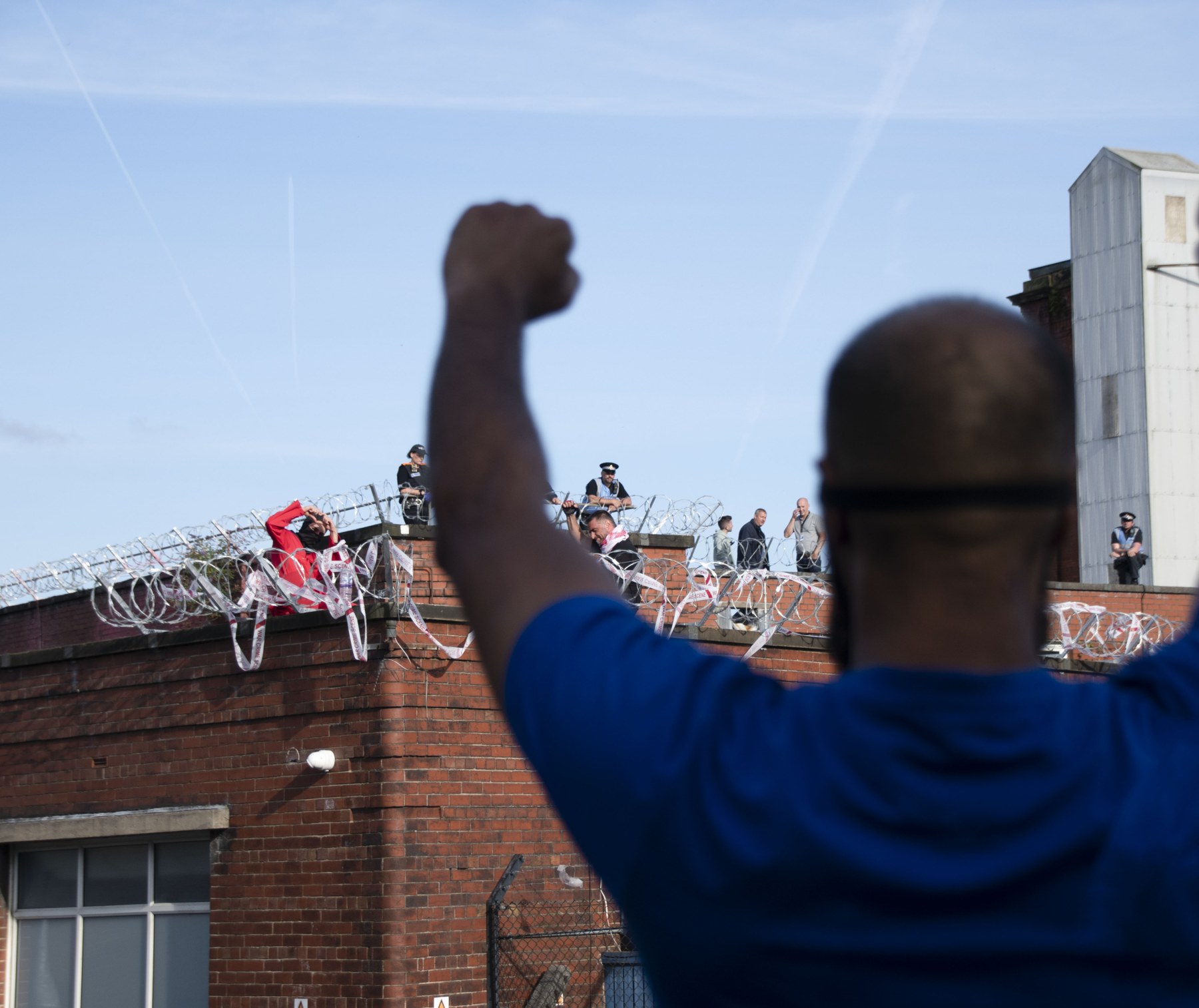
The protests documented in my archive.
Elbit announces the Ferranti Power and Control sale.
7 October comes after the Oldham campaign and reported closure.
I return to photograph a different business at the mill.
The site now also accommodates a self-storage business. Oldham Council granted retrospective permission in September 2025 for containers on land west of the mill. Different parts of the site are finding different uses. [2]
Elsewhere, there is a particularly useful example for anyone who believes that leaving Elbit must mean abandoning skilled manufacturing.
Engineering has other uses.
Elite KL was sold out of Elbit ownership in 2024. Its new owners reportedly told campaigners they would withdraw from future defence contracts. The business continued and was subsequently renamed Calatherm. [3]
What about the jobs? In Tamworth, the engineering firm once known as Elite KL now trades as Calatherm. It makes heating and cooling systems for Dennis Eagle refuse trucks. That’s one answer to the question we kept hearing outside Cairo Mill. The skills people bring to a factory can be put to work on things their communities use every day. [4]
Tamworth shows an engineering business continuing beyond Elbit ownership, serving civilian customers. Civilian production was already part of its work; independence gave the business a stated direction towards sustainable technologies. Its engineering expertise had applications beyond military production.
The question is how investment can sustain and expand that civilian work—and protect the people doing it. A worker cannot pay the rent with a promise about a greener future. There must be orders, wages, security and a practical route from one kind of production to another.
Tamworth gives us more than a hypothetical alternative. The business’s own account describes engineering work that serves public transport, civilian vehicles and energy technology.
For workers at the sites still being challenged, that should widen the discussion. Their skills are not the property of the arms industry. Their communities deserve investment in work they can be proud of without having to set aside questions about what the finished product does.
The purpose of these campaigns is to stop the atrocities at their source: interrupting the manufacture, financing and movement of weapons, military equipment and components destined for Israel’s military. That is why the argument about disruption so often seems to miss what protesters are saying.
Disruption is the point.
Protest at DSV, Stoke-on-Trent
Watch the original on Instagram ↗If the video does not play here, watch it on Instagram using the link above.
In the footage from Stoke, a police officer asks whether those taking part understand the disruption they are causing.
Of course they do. That is the point.
The dispute is over what should continue uninterrupted. Campaigners allege that DSV provides logistics services connected to Elbit. Their intention is to make that relationship something the company has to confront. The specific consignments and the company’s position need establishing separately from the footage.
They want to go home.
Another exchange from the protest footage
Watch the exchange about workers who have been there all night and want to go home.
▶ Watch the video on Instagram ↗Opens on Instagram in a new tab.
In another clip, I hear the argument that the workers have been there all night and want to go home.
They want to go home to their families. Palestinian workers want the same. Concern for one cannot excuse helping destroy the other. These workers should be earning their living doing something else. At Cairo Mill, people already are.
The campaign elsewhere continues under several organisations. In January 2026, coordinated blockades targeted premises associated with Rafael in Newcastle, BAE Systems in Samlesbury and Leonardo in Edinburgh. In September, a lock-on at UAV Engines in Shenstone led to nine arrests. On 2 November, Novara reported three arrests following equipment damage at Ultra I&C in Tring; People Against Genocide alleged a supply relationship with Elbit-linked UAV Tactical Systems. Ultra had not responded at publication. [5]
These were disruptions, not established permanent closures. But departures have happened. October reporting on Elbit Systems UK’s accounts recorded a £1.3 million cost to surrender its Aztec West lease in Bristol following the sustained campaign there. Elbit continued operating at other premises. [6]
The financial relationships have been challenged too. People Against Genocide targeted eleven HSBC branches in December 2025. Later disclosures showed the particular reported Elbit shareholding falling from 16,317 shares to 651 and then to zero by the end of March 2026. Campaigners claimed success; the holdings record establishes the change, rather than the bank’s reason for selling. [7]

For some of those involved in Oldham, the consequences lasted long after the factory closed. Andrew McMaster and Adam Haigh received six-month suspended sentences in April 2025 over an action in February 2021. Richard Barnard was convicted of criminal damage relating to Oldham in the wider Elbit Eight trial in 2023, which also produced acquittals and unresolved charges. [8]
Then came Palestine Action’s proscription under terrorism legislation in July 2025. I regard that designation as outrageous and disproportionate. Criminal offences can be prosecuted without turning expressions of support for an organisation into a matter for terrorism law.
On 4 November 2026, the UK Supreme Court began hearing Palestine Action co-founder Huda Ammori’s appeal against the ban (UKSC/2026/0099). The High Court ruled in February that the ban unlawfully interfered with the rights to freedom of expression and assembly. The Court of Appeal overturned that ruling in June. As of 4 November, the ban remained in force and the Supreme Court had yet to give judgment. [9]
The campaign continues
On the day the appeal opened, Silence Elbit Drones said twelve of its campaigners were blockading roads leading to Elbit’s Filton facility. The group posted this reel about the action.
Watch the Filton reel on Instagram ↗Those proceedings continue. Back at Cairo Mill, I was watching people come and go with their shopping.
The mill, on an ordinary Friday.
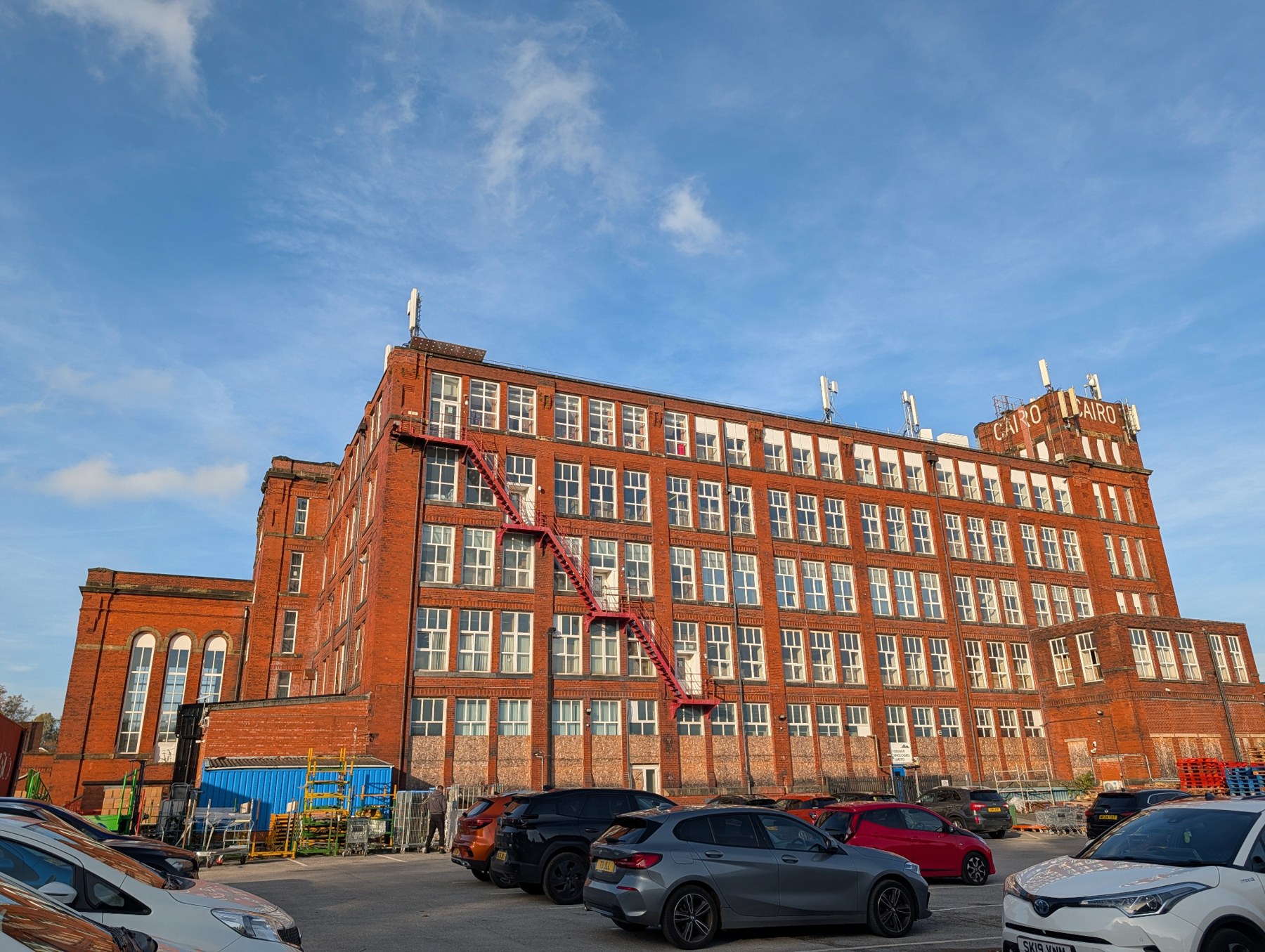
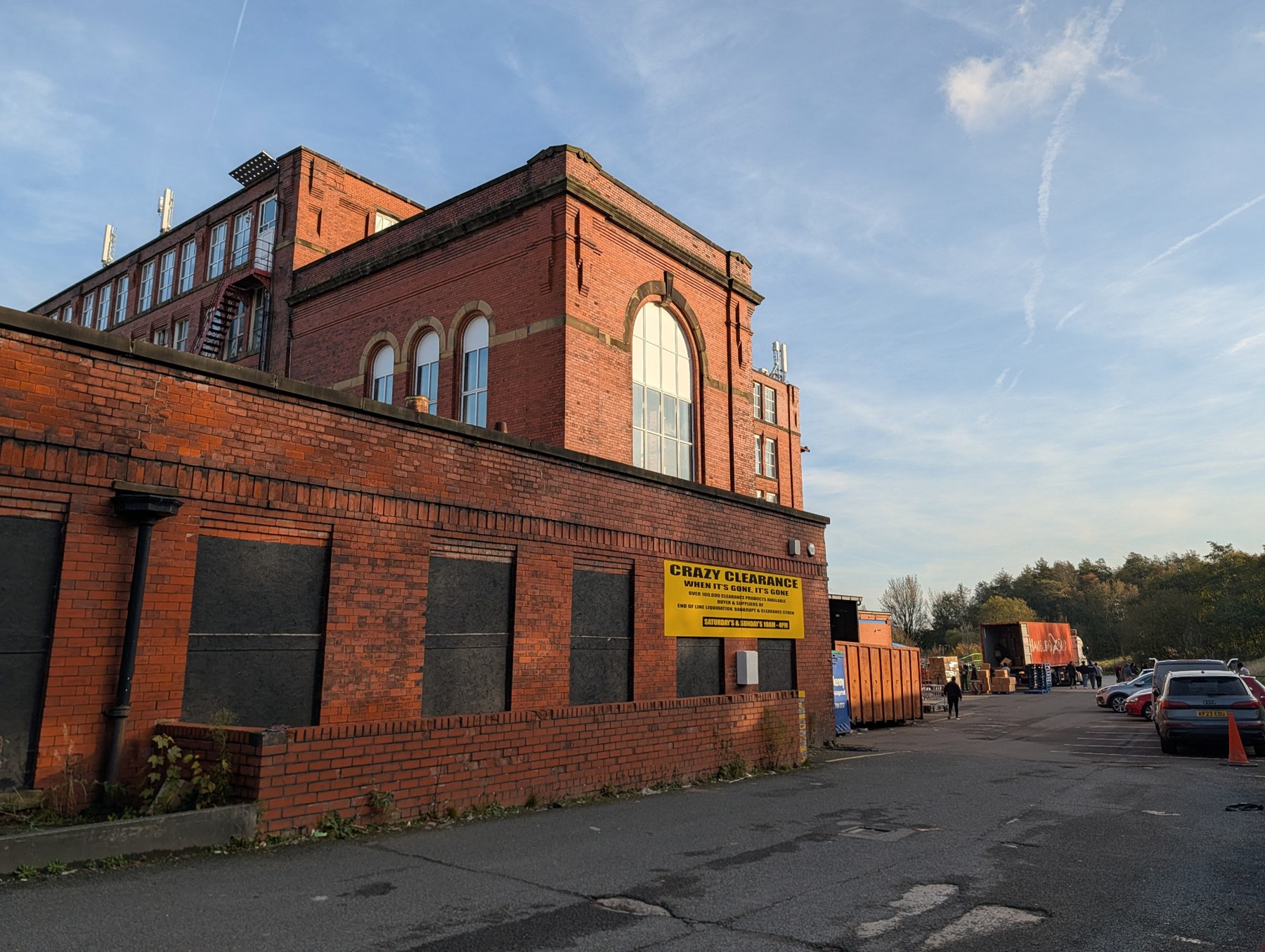
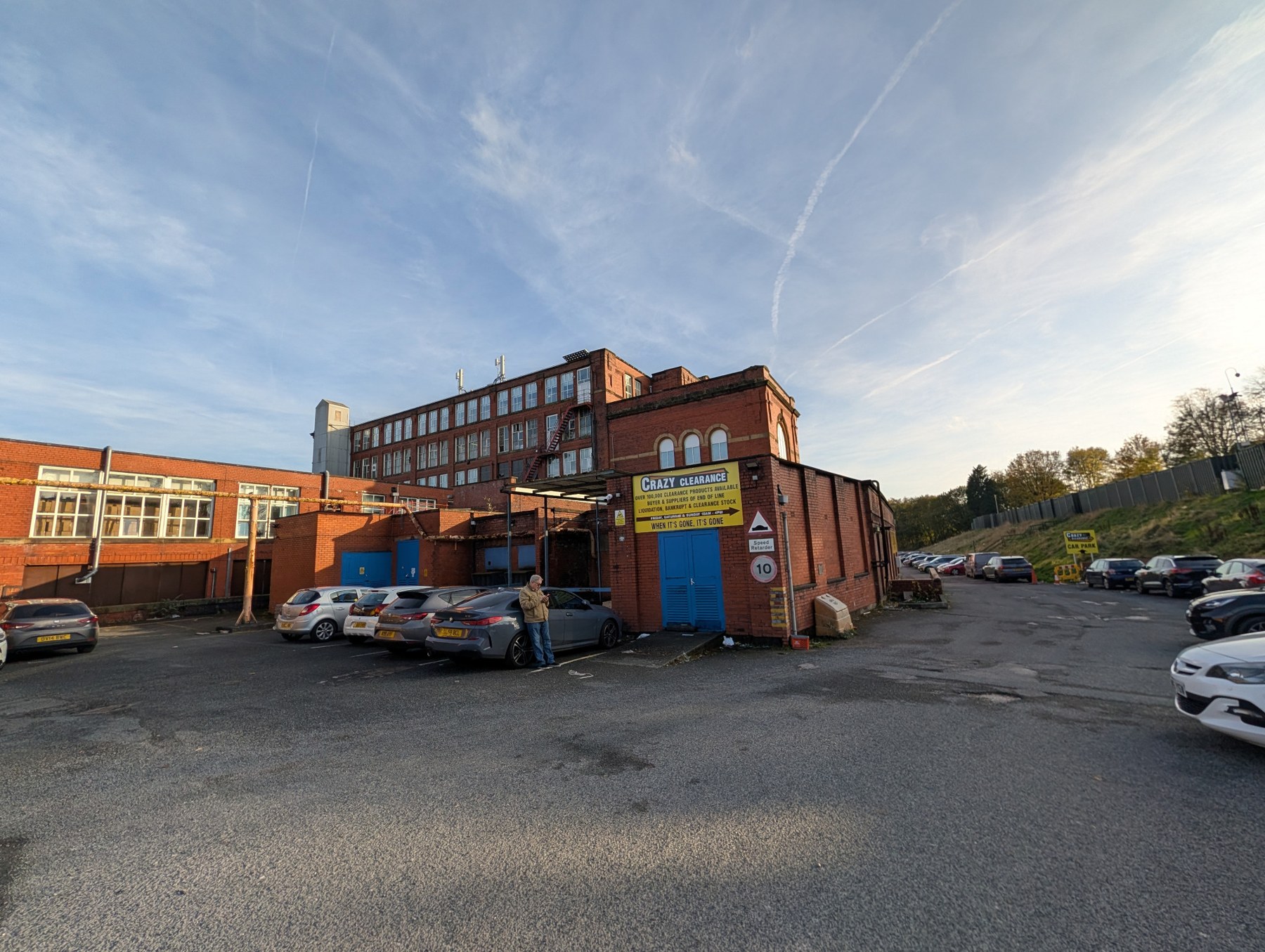
That struggle matters. But the question I carried away from Cairo Mill was about what can follow a successful campaign.
A company leaves. A building remains. People still need work.
Challenging Elbit’s role in supplying Israel’s military also means asking what comes next for the sites and the people working there. Oldham shows a site being used differently. Tamworth shows civilian engineering continuing beyond Elbit ownership. Both challenge the idea that communities have no other option.
I look again at the portraits on the steps, then at the shoppers leaving with their trolleys.
We were asked what would happen to the jobs if Elbit left. On Friday, I walked through those gates and found people working.
The mill had another purpose: people earning a living without helping produce weapons, military equipment or components for Israel’s armed forces.


